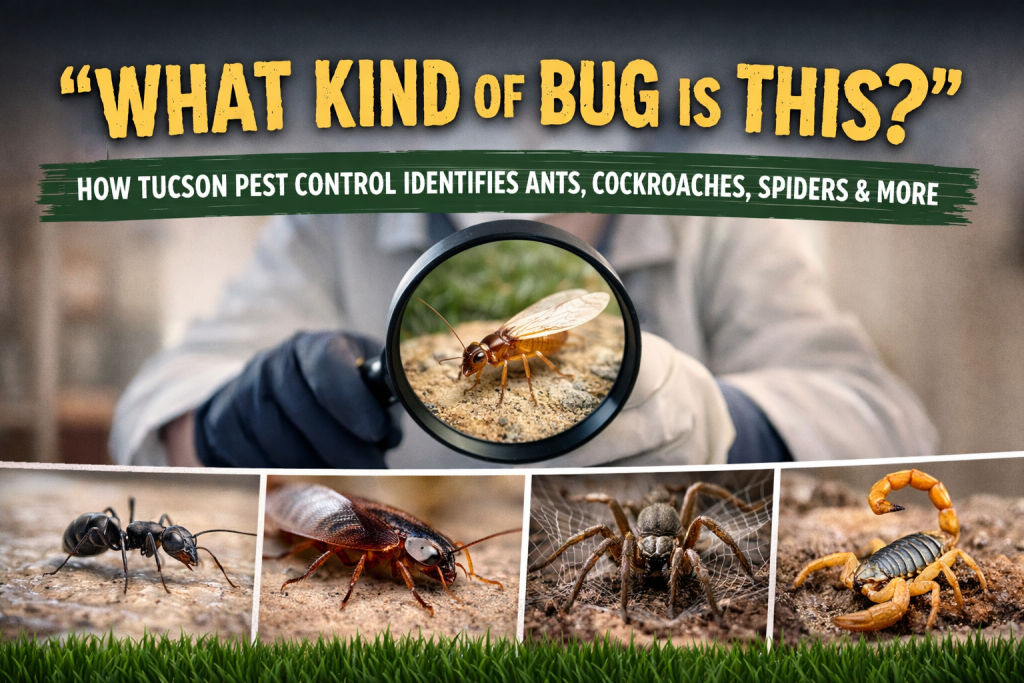
“What Kind of Bug Is This?” A common Question from Tucson Homeowners
If you’ve ever spotted a bug in your home and immediately wondered, “What kind of bug is this?”, you’re not alone. This is one of the most common questions we hear from homeowners throughout Tucson and Southern Arizona.
Whether it’s ants in the kitchen, a cockroach in the bathroom, a spider in the garage, or even a scorpion near the baseboards, proper identification is the first and most important step in effective pest control. Different pests require different treatments, and guessing can often lead to wasted time and frustration. Here’s how professional exterminators identify pests—and how you can spot some key clues yourself.
1. Number of Legs: Insect, Spider, or Something Else?
Counting legs is one of the fastest ways to narrow things down.
- 6 legs – Insects such as ants, cockroaches, termites, and beetles
- 8 legs – Spiders and scorpions
- Many legs – Usually centipedes or millipedes
For example, if the pest has eight legs and no antennae, you’re likely dealing with a spider or scorpion rather than an insect.
2. Body Segments and Shape
Most insects have three body segments:
- Head
- Thorax
- Abdomen
Common examples include ants, cockroaches, and termites. Ants are known for their narrow waist, while cockroaches have flatter, oval-shaped bodies that help them hide in cracks and crevices. Spiders and scorpions have two main body sections, which helps distinguish them quickly during an inspection.
3. Antennae: A Key Identification Tool
Antennae vary widely and offer important clues:
- Elbowed antennae – Common with ants
- Long, straight antennae – Typical of cockroaches
- Short or barely visible antennae – Seen on some beetles
- No antennae – Spiders and scorpions
If you notice long antennae paired with fast movement, it often points to cockroaches.
4. Wings: Visible, Hidden, or None?
Not all bugs with wings fly, but wings still help with identification:
- Winged ants or termites – Often seen during swarming season
- Hard wing covers – Found on beetles
- No wings – Worker ants, spiders, scorpions, and immature insects
Seeing winged insects indoors can sometimes indicate a more serious issue, such as a termite swarm.
5. Mouth Parts: How the Pest Feeds
Different pests feed in different ways, and their mouth parts reflect that:
- Chewing mouth parts – Ants, termites, beetles
- Piercing or biting mouth parts – Mosquitoes, bed bugs
- Grasping or venomous mouth parts – Spiders, scorpions, Centipedes
Knowing how a pest feeds helps professionals choose the safest and most effective treatment.
6. Size, Color, and Behavior
Professional exterminators also look at:
- Size (tiny ants vs. large roaches)
- Color patterns or markings
- How the pest moves (fast runners like cockroaches vs. slow crawlers)
Fast-moving pests that scatter when lights turn on are often cockroaches, while solitary pests in garages or yards may be spiders or scorpions.
7. Where You Found the Pest Matters
Location plays a big role in pest identification:
- Kitchens and bathrooms – Ants and cockroaches
- Bedrooms – Spiders or biting pests
- Garages and yards – Scorpions, spiders, and occasional invaders
- Near windows or doors – Ants and seasonal pests
This context helps determine how pests are entering your home and why they’re there.
Why Accurate Identification Is Critical for Pest Control
Misidentifying pests often leads to ineffective DIY treatments and recurring problems. Termites may look like ants, and treating one like the other can allow serious damage to continue unnoticed. That’s why professional Tucson pest control services focus on correct identification first. Once the pest is properly identified, treatment can be targeted, effective, and long-lasting.
When to Call a Professional Exterminator
If pests keep returning, you’re unsure what you’re seeing, or you suspect termites, scorpions, or cockroaches, it’s time to call a professional. A trained technician can quickly identify the pest and recommend the right solution for your home.
If you ever find yourself asking, “What kind of bug is this?”, we’re here to help. Call the local Tucson pest control experts today at 520-263-8851!