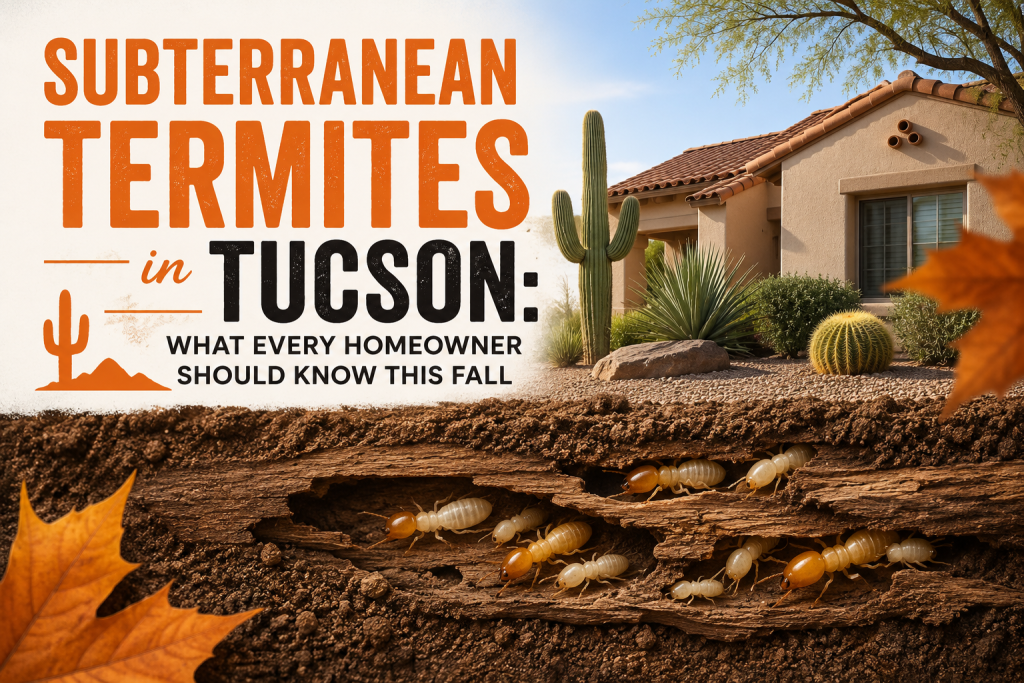
If you’ve lived in Southern Arizona for any length of time, you know our monsoon storms bring more than just relief from the summer heat. They also bring out one of the most destructive pests in the state: the subterranean termite. Late summer and early fall, right after our monsoon rains, is prime time for termite activity across Tucson, Green Valley, and Sahuarita, which makes September the perfect month to talk about what these pests are, how to spot them, and what to do if you find them on your property.
At Bill’s Home Service, we’ve been protecting Southern Arizona homes since 1964. As a third-generation, family-owned business built on the principle of “doing the right thing and taking care of people,” we’ve seen firsthand how much stress a termite problem can cause a homeowner, and how much easier it is to handle when you catch it early. Here’s what you need to know.
Why Subterranean Termites Are Such a Big Deal in Tucson
Subterranean termites are considered the most destructive termite species in Arizona, and for good reason. Unlike drywood termites, which nest inside the wood they eat, subterranean termites live in underground colonies that can house thousands of individuals. They build distinctive mud tubes to travel from the soil to the wood in your home, which allows them to stay hidden while they cause damage.
Because our desert soil and structures create favorable conditions, Tucson homes, fences, patio covers, and even landscaping timbers can all become food sources. Left untreated, a colony can cause significant structural damage over time, often without any obvious warning signs until the damage is already done.
Monsoon Season and Termite Swarms: Why September Matters
Southern Arizona’s subterranean termites are known to swarm following monsoon rains, typically between July and September. That means late summer and early fall are exactly when Tucson homeowners are most likely to notice winged termites, sometimes called “alates,” swarming near porch lights, windows, or moist soil around the foundation.
A swarm is actually a helpful, visible signal. It means a mature colony nearby is sending out reproductive termites to start new colonies, and it’s your cue to take a closer look at your property before those new colonies get established.
Signs of Subterranean Termites Around Your Home
Termite activity can be subtle, but there are a few telltale signs Tucson homeowners should watch for, especially after monsoon storms:
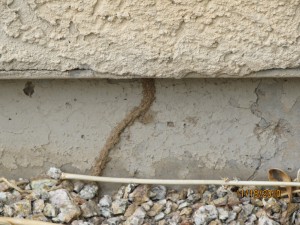
- Mud tubes: Pencil-width tunnels made of soil and saliva running along your foundation, exterior walls, crawl space, or plumbing penetrations. These protect termites from the dry desert air as they travel between soil and wood.
- Winged swarmers or shed wings: Discarded wings on windowsills, patios, or near light fixtures are often the first sign homeowners notice.
- Hollow-sounding or damaged wood: Wood that sounds hollow when tapped, or that crumbles or sags unexpectedly.
- Visible tunneling or galleries in wood: Often found along the grain, sometimes packed with soil.
- Exit holes on interior walls: Small nail/pin holes typically with a little dirt around the opening on drywall where termites have tunneled through the drywall from inside the wall.
If you notice any of these signs, it’s worth scheduling a professional inspection before the situation progresses.
What to Do If You Spot Termite Activity
- Don’t disturb mud tubes or swarms. Breaking them up can scatter the colony and make it harder to treat effectively.
- Document what you see. Photos are helpful for a technician evaluating the extent of activity.
- Reduce wood-to-soil contact. Keep mulch, firewood, and landscaping timbers away from your foundation.
- Address moisture issues. Fix leaky spigots, irrigation lines, and drainage problems that keep soil near your home consistently damp.
- Call a licensed professional. Subterranean termite colonies are established underground and typically require professional-grade treatment to eliminate.
How Bill’s Home Service Protects Tucson Homes from Termites
Our team has been serving Southern Arizona families for three generations, and termite protection has always been part of that commitment. When you work with us, you can expect:
- Thorough inspections that check the areas subterranean termites favor most, from foundations and crawl spaces to exterior wood and irrigation-prone zones.
- Locally informed treatment plans built around our monsoon climate, soil conditions, and the construction styles common throughout Tucson, Green Valley, and Sahuarita.
- Straightforward communication, so you understand exactly what we found and what we recommend, with no pressure and no surprises.
- Old-fashioned customer service, the same value our grandfather built this company on back in 1964: doing the right thing and taking care of people.
Termite damage tends to be far less costly to address when it’s caught early, so if you’ve noticed swarmers, mud tubes, or other warning signs on your property this fall, now is the time to have it checked out.
Frequently Asked Questions About Subterranean Termites in Tucson
Southern Arizona’s desert subterranean termites commonly swarm following monsoon rains, generally between July and September, making late summer and early fall a key time to watch for activity.
No. Subterranean termites live in underground colonies and travel to wood sources through mud tubes, while drywood termites nest directly inside the wood they infest. Both are found in the Tucson area, but they behave and are treated differently.
A few swarmers near an outdoor light don’t necessarily mean your home is infested, but mud tubes on your foundation, swarmers appearing indoors, or damaged wood are stronger indicators that a colony is established on or near your property. A professional inspection is the most reliable way to know for sure.
DIY products may address surface-level activity, but subterranean colonies live underground and can be extensive. Professional treatment is generally needed to reach and eliminate the colony effectively.
It’s recommended for homeowners to look for signs of termites regularly, especially during the fall. An annual professional termite inspection is a good baseline for most Tucson homes, with an additional check after heavy monsoon activity or if you notice any warning signs.
Protect your Southern Arizona home from subterranean termites.
Bill’s Home Service has been taking care of Tucson, Green Valley, and Sahuarita families since 1964. Call us today at 520-625-2381 or visit www.BillsHomeService.com to schedule your termite inspection.